Calories and nutrition facts
Tomato soup
100 g of tomato soup has 44 calories, 0.49 g protein, 1.9 g carbs and 3.7 g fat. 1 plate (300 g) has 132 calories.
- Carbs 20 %
- Protein 4 %
- Fat 76 %

 132
 5.7 g
 1.5 g
The Health Score from the ClemCam app: 1 to 10, based on the Nutri-Score (2023) per 100 g.
Nutrition facts
| Nutrition facts | per 100 g | 1 plate (300 g) |
|---|---|---|
| Energy | 44 kcal 184 kJ | 132 kcal 552 kJ |
| Fat | 3.7 g | 11 g |
| of which saturated | 1.2 g | 3.6 g |
| Carbohydrates | 1.9 g | 5.7 g |
| of which sugars | 1.5 g | 4.4 g |
| Fibre | 0.5 g | 1.5 g |
| Protein | 0.49 g | 1.5 g |
| Salt | 0.22 g | 0.66 g |
Vitamins
| Nutrition facts | per 100 g | % reference intake |
|---|---|---|
| Vitamin A | 54 µg | 6.8 % |
| Vitamin B1 (thiamin) | 0.01 mg | 0.9 % |
| Vitamin B2 (riboflavin) | 0.01 mg | 0.7 % |
| Niacin (B3) | 0.21 mg | 1.3 % |
| Vitamin B6 | 0.02 mg | 1.4 % |
| Folate | 5 µg | 2.5 % |
| Vitamin C | 6 mg | 7.5 % |
| Vitamin D | 0.01 µg | 0.2 % |
| Vitamin E | 0.62 mg | 5.2 % |
| Vitamin K | 5 µg | 6.7 % |
Minerals
| Nutrition facts | per 100 g | % reference intake |
|---|---|---|
| Calcium | 9 mg | 1.1 % |
| Iron | 0.1 mg | 0.7 % |
| Magnesium | 4 mg | 1.1 % |
| Zinc | 0.06 mg | 0.6 % |
| Potassium | 56 mg | 2.8 % |
| Phosphorus | 11 mg | 1.6 % |
| Iodine | 1 µg | 0.7 % |
Adult reference intakes from EU Regulation 1169/2011 (fibre 30 g and salt 6 g as recommended by the DGE). Only values above 0 are shown.
Compared
Other foods in Dishes, per 100 g.
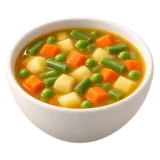
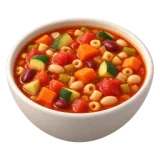
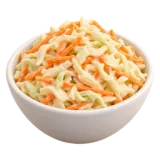
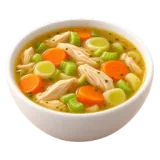
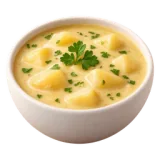
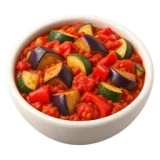
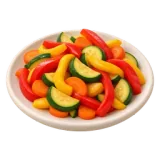
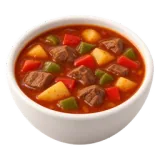
Next time, just take a photo.
Snap your plate and ClemCam spots each food, estimates the portion and works out calories, protein, carbs and fat. With the same BLS values as this page.

Questions
How many calories are in 1 plate (300 g) of tomato soup?
1 plate (300 g) of tomato soup has 132 calories, with 1.5 g protein, 5.7 g carbs and 11 g fat.
How much protein is in tomato soup?
Tomato soup has 0.49 g protein per 100 g. That is 4% of its calories.
How many carbs are in tomato soup?
Tomato soup has 1.9 g carbs per 100 g, including 1.5 g sugars and 0.5 g fibre.
Source: German Federal Food Code (Bundeslebensmittelschlüssel, BLS) 4.0, Max Rubner Institute (2025), licensed under CC BY 4.0. Values per 100 g edible portion, BLS code X444343. Serving sizes are typical amounts; per-serving values, shares and the Health Score were calculated by ClemCam.